DeepSeek vs ChatGPT in 2026: Can the Free Open-Weights Model Beat OpenAI?
Disclosure: Some links in this article are affiliate links. If you click and make a purchase, we may earn a commission at no extra cost to you. This does not influence our editorial recommendations - we only recommend products and services we genuinely believe in. Read our full affiliate disclosure.
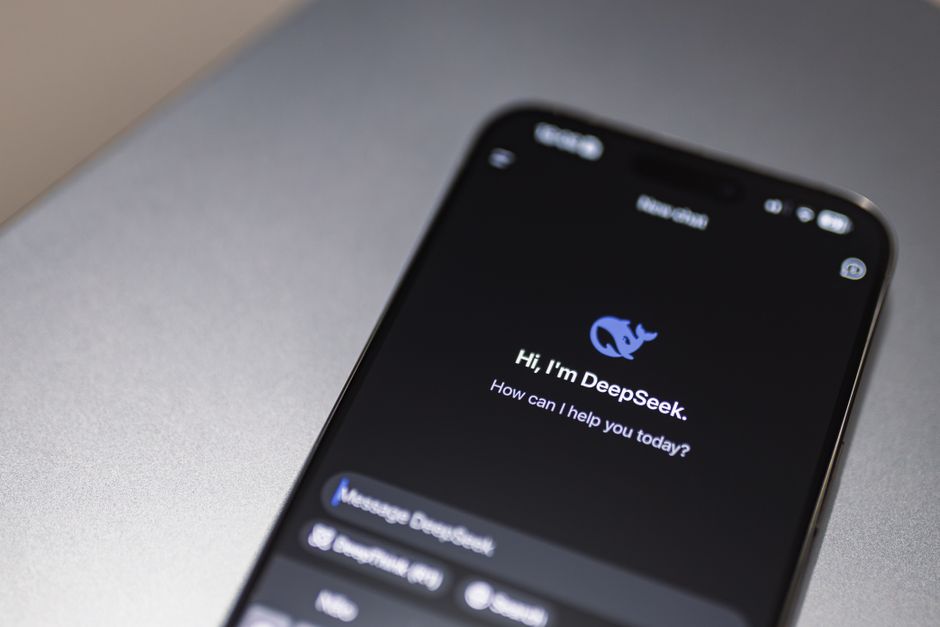
The artificial intelligence landscape underwent a seismic shift with the emergence of DeepSeek. Built by an innovative open-weights research team, DeepSeek's flagship models (including DeepSeek-V3 and the reasoning-focused DeepSeek-R1) have matched and in some cases surpassed proprietary models like OpenAI's GPT-4o - at a fraction of the operational cost.
In 2026, developers, researchers, and productivity power users are actively asking: Do you still need to pay $20/month for ChatGPT Plus, or does DeepSeek offer everything you need for free? Here is our hands-on benchmark and architecture comparison.
Head-to-Head Specification Comparison
| Feature | OpenAI ChatGPT (GPT-4o) | DeepSeek (V3 / R1) |
|---|---|---|
| Model Weights Availability | Closed proprietary | Open weights (MIT license) |
| Free Web Interface Access | Generous (rate limited) | 100% Free full-model access |
| API Pricing (per 1M input tokens) | ~$2.50 - $5.00 | ~$0.14 - $0.27 (10x cheaper) |
| Coding & Python Benchmarks | 90.2% HumanEval | 91.8% HumanEval |
| Mathematical Reasoning (MATH) | 88.5% | 90.8% |
| Self-Hosting Capability | Impossible (Cloud only) | Supported via Ollama / vLLM |
| Voice & Multimodal Mode | Native advanced voice & vision | Vision supported; text/code focused |
1. Coding Benchmarks: Python, TypeScript, and Bug Fixing
For software engineers, DeepSeek has become an indispensable primary coding assistant. In real-world software testing across complex React applications, database schema migrations, and Docker configuration files:
- DeepSeek excels at concise syntax: Unlike ChatGPT, which often generates excessive conversational pleasantries and disclaimers, DeepSeek produces clean, modular, production-ready code immediately.
- DeepSeek-R1 Reasoning Power: R1 uses reinforcement-learning-driven internal chain-of-thought tokens to plan architecture decisions before emitting code, dramatically reducing subtle logic bugs.
2. Mathematical and Logical Reasoning
When tested on complex logic puzzles, algorithmic competitive programming, and graduate-level probability problems, DeepSeek-R1 frequently outperforms standard GPT-4o. By allowing the model to "think" for 10 to 30 seconds before replying, it identifies edge cases that fast autoregressive models routinely miss.
3. The Pricing Disruption: API Costs
The most staggering differentiator is economics. DeepSeek's Mixture-of-Experts (MoE) architecture activates only a fraction of its total parameters per token, drastically cutting inference compute costs:
- Running an automated customer service agent that processes 10 million tokens a month costs over $35 with OpenAI, but under $2.50 with DeepSeek.
- Developers can run quantized DeepSeek models locally using Ollama on an Apple Mac or desktop PC with an RTX 4090 GPU with total data privacy.
Where ChatGPT Still Wins
Despite DeepSeek's technical brilliance, ChatGPT maintains clear advantages in several key areas:
- Multimodal Ecosystem: Advanced Voice Mode, real-time image analysis, and DALL-E image generation.
- Enterprise Integration: Deep connectors with Microsoft OneDrive, Google Drive, and native macOS desktop apps.
- Consumer Polishing: Custom GPTs, memory persistence across conversations, and mobile app reliability.
Final Verdict
- Use DeepSeek for heavy software development, algorithmic math, complex logical problem-solving, and budget-conscious API integrations.
- Keep ChatGPT Plus if you rely on voice conversations, visual file analysis, and deep workflow integration across mobile and desktop.

Alex Morgan is the founder and lead editor of RemoGrid. With over six years of hands-on experience in remote operations, cross-border freelance workflows, and AI tool benchmarking, Alex independently tests and audits software platforms to help modern digital workers build sustainable online income streams. He regularly reviews international payment systems (Wise, Stripe, Payoneer, local mobile wallets) and conducts real-world usability benchmarks across AI productivity tools.