DaVinci Resolve Review: The Free Editor That Beats Paid Ones
Disclosure: Some links in this article are affiliate links. If you click and make a purchase, we may earn a commission at no extra cost to you. This does not influence our editorial recommendations - we only recommend products and services we genuinely believe in. Read our full affiliate disclosure.
DaVinci Resolve Review 2026: The Free Editor That Beats Paid Ones
The video editing world has an unusual fact: the best professional editor is free. DaVinci Resolve went from a high-end color grading tool to a full editing suite, and in 2026 it is the standard recommendation for anyone who takes video seriously. This review covers what it does, the hardware it needs, and the honest difference between free and paid.
Note: this page names paid tools. If you subscribe through the links here, RemoGrid may earn a commission at no extra cost to you.
How We Evaluate and Test Products
Our review methodology is built on real-world hands-on testing, practical feature analysis, and honest cost comparisons. We evaluate each tool across key criteria including ease of setup, reliability, user interface quality, customer support responsiveness, and overall value for money.
Rather than just summarizing marketing bullet points, we test products under realistic working conditions. We look at how the software handles heavy workloads, whether advertised features have hidden limitations, and how easy it is to cancel or export data if you decide to switch platforms.
We also pay special attention to international user considerations, such as regional payment method support, global server latency, and localized pricing options. This ensures our recommendations are genuinely practical for users worldwide.
Final Verdict and Who Should Buy
Before committing to an annual plan or expensive subscription tier, always test the platform using a free trial or monthly billing option first. Ensure the product integrates smoothly with your existing software stack and solves an immediate bottleneck in your workflow.
If the tool offers a solid free tier that meets your current needs, stick with it until your project or business scale demands the advanced features of a paid plan. Investing in software should always be justified by clear time savings, improved output quality, or direct revenue potential.
The Short Answer
DaVinci Resolve is a professional-grade editing and color grading suite that is genuinely free, with no watermark and no trial limits. It covers editing, color, audio and delivery in one application. The paid Studio version is a one-time purchase that adds advanced features. The honest caveat: it needs a capable computer, and it has a steeper learning curve than the simple editors.
What DaVinci Resolve Actually Is
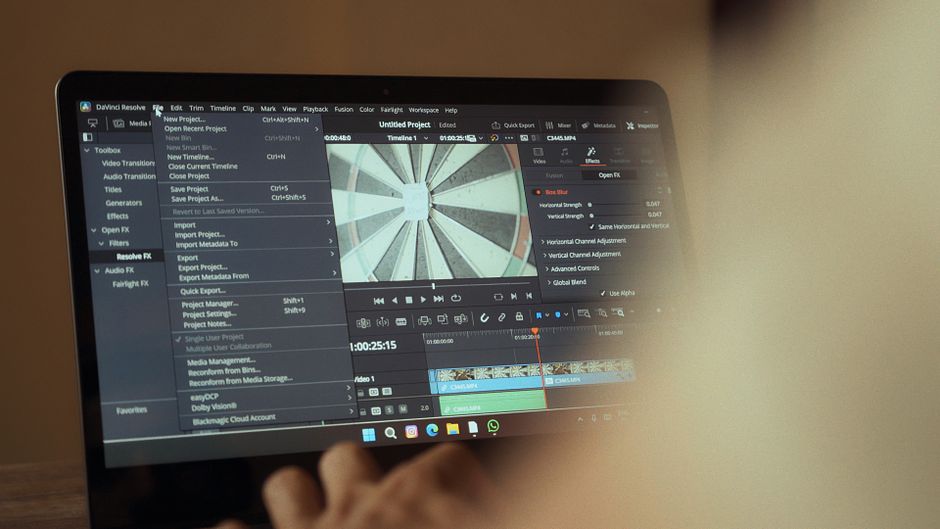
DaVinci Resolve is an all-in-one post-production suite: editing, color grading, audio mixing, visual effects and delivery in a single application. It began as the industry-standard color grading tool for films and expanded into a full editor. The free version is not a limited trial - it is the professional product with a few advanced features reserved for the paid Studio tier. That is the fact that changed the editing software market.
The Free Version Reality
The free version of Resolve includes the full editing workflow, the professional-grade color grading tools, Fairlight audio and the delivery page. It does not force a watermark and has no time limit. The honest statement is simple: there is no better free tool in the category, and very few paid ones beat it. A freelancer editing client work with Resolve free has the same tools as a studio.
The Studio Difference
The paid Studio version is a one-time purchase, not a subscription - a rarity in 2026. It adds advanced noise reduction, more visual effects, and removes the export resolution limits (free is capped at 4K). The honest advice: the free version covers most work, and Studio is the upgrade when the advanced features or higher resolutions become real needs.
The Hardware Reality
Resolve's honest cost is the hardware. It uses the GPU heavily, and a capable graphics card makes the difference between smooth editing and frustration. On weak laptops, even the free version struggles with large timelines. The honest advice for beginners: check your computer against the requirements before adopting it, because software is free and machine is not.
The Learning Curve
Resolve is powerful and that power has a price in complexity. The interface has more pages and panels than a simple editor, and the first sessions can feel overwhelming. The honest path: learn the edit page basics first, then grow into color and audio. It rewards the investment - skills transfer to professional work.
The Freelance Angle
For freelancers, Resolve is the business case: professional output at zero software cost, no watermark, and client work that needs serious editing or color gets a serious tool. A video editor charging for services keeps the full fee instead of paying for software. The honest recommendation: Resolve free is the freelancer's editor, and Studio is the upgrade when the features pay for themselves.
The Comparison
The honest landscape: CapCut for short-form speed, Resolve for professional work, Premiere Pro for teams locked into Adobe, Final Cut for Mac-first editors. Resolve wins on price, color and the all-in-one workflow. The only real rival in free video is CapCut, and they serve different formats.
The Color Grading Edge
Color is where Resolve built its name, and the honest truth is that the free version carries the industry's best color tools. The color page lets an editor match shots, grade scenes and create looks that the simple editors cannot touch. For work where color matters - interviews, product videos, anything with skin tones - that edge alone justifies learning the tool. The beginner does not need to master grading on day one; the knowledge that the tools exist and are free is the head start.
What I'd Actually Do
For my own editing work I would use Resolve free as the main tool, CapCut for quick short-form clips, and upgrade to Studio the moment I needed the advanced features or higher resolutions. I would invest the first week in the learning curve, because the tool pays for itself in capability and zero software cost.
Final Takeaway
DaVinci Resolve is the honest best value in video editing in 2026: professional-grade, genuinely free and built around the industry's best color tools. Barriers are the hardware and learning curve, not the price. Anyone serious about video should use it, and the paid version is a one-time upgrade, not a subscription to fear.
Also read: the CapCut review 2026, the Adobe-style tools for content creators, best freelance platforms for video editors.
Frequently Asked Questions
Yes. The free version is genuinely professional-grade with editing, color grading, audio and delivery tools. The paid Studio version adds a few advanced features and 4K limits are removed.
Resolve matches or beats Premiere on color grading and is free, which makes it the better value for most editors. Premiere remains preferred by some teams for its wider tool set.
Resolve needs a decent computer with a capable GPU, and large projects need more. On weak hardware it struggles, which is the main barrier for beginners.
It is powerful but has a steeper learning curve than simple editors like CapCut. Beginners should start with the basics in Resolve and grow into it, since it does not force a watermark.
Studio is a one-time purchase that adds features like advanced noise reduction, more effects and 4K and higher export limits. The free version already covers most editing work.
Yes, the color tools are the strongest part of the software. The free version covers most grading needs.
Resolve needs a capable GPU and enough memory to run smoothly. Check the requirements before installing on a low-end laptop.

Alex Morgan is the founder and lead editor of RemoGrid. With over six years of hands-on experience in remote operations, cross-border freelance workflows, and AI tool benchmarking, Alex independently tests and audits software platforms to help modern digital workers build sustainable online income streams. He regularly reviews international payment systems (Wise, Stripe, Payoneer, local mobile wallets) and conducts real-world usability benchmarks across AI productivity tools.